Method(Ec)ology Lab
About
Research that has practical applications for conservation of threatened species and for the wider profession of ecology and environmental management. Particular focus on testing or developing the evidence-base for best-practice in monitoring and mitigation methods. Part of Edinburgh Napier University’s Centre for Conservation & Restoration Science (CCRS).
Researchers
Prof. Pat White FCIEEM
Professor of Ecological Science and Practice | Member of IUCN Otter Specialist Group & Mammal Society Science Advisory Committee | Email p.white@napier.ac.uk | LinkedIn | Google Scholar | ResearchGate
Dr Mel Findlay MCIEEM
Visiting Senior Fellow in Evidence-based Practice in Ecology | Director, Findlay Ecology Services Ltd., UK | Member of IUCN Otter Specialist Group
Dr Iain Adderton CEnv MCIEEM
Visiting Senior Fellow in Ecology | Senior Associate Ecologist, Stantec, UK

Stephen Dias
Visiting Fellow in Applied Ecology | Research Associate, Vanasa Conservation Foundation, India | Member of IUCN Otter Specialist Group

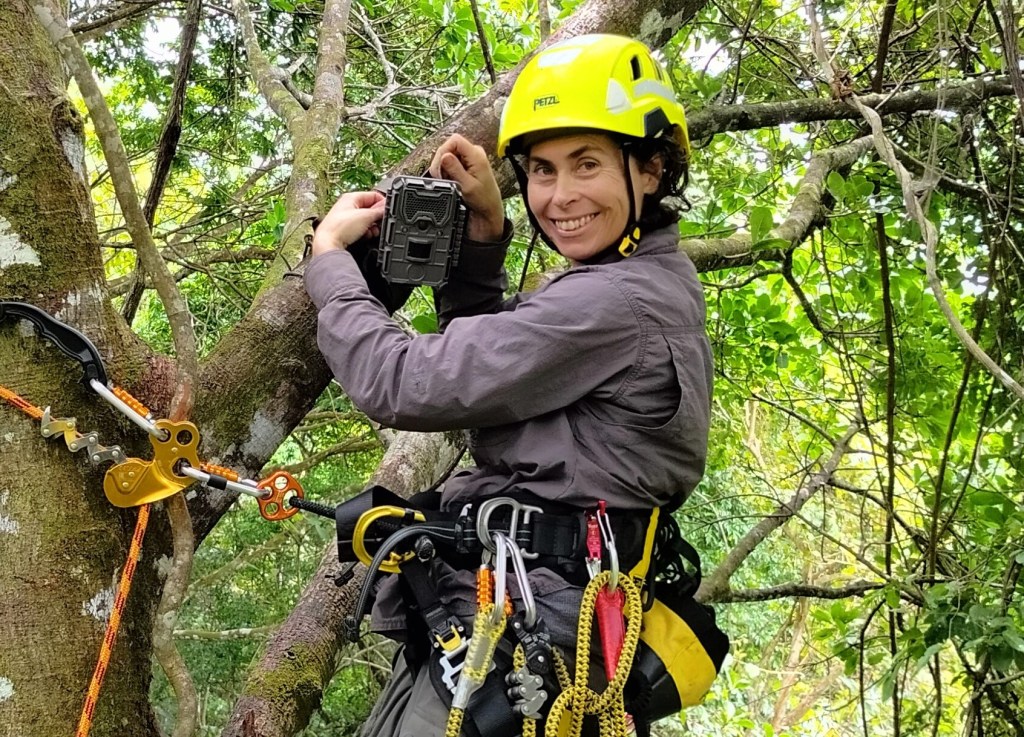
Lucy Hughes
Visiting Fellow in Tropical Ecology | Scientist, Conservation through Research, Education, Action (CREA), Panama
Current research students
Ben Blackledge
PhD student studying ‘Use of footfall and seismology in wildlife surveys: closing the gap between theory and application’ (supervisors Prof. Pat White, Dr Luigi La Spada, Prof Rob Briers, Dr Niamh McHugh). Co-funded by Game & Wildlife Conservation Trust. PhD paper here.
Emily McKelvie
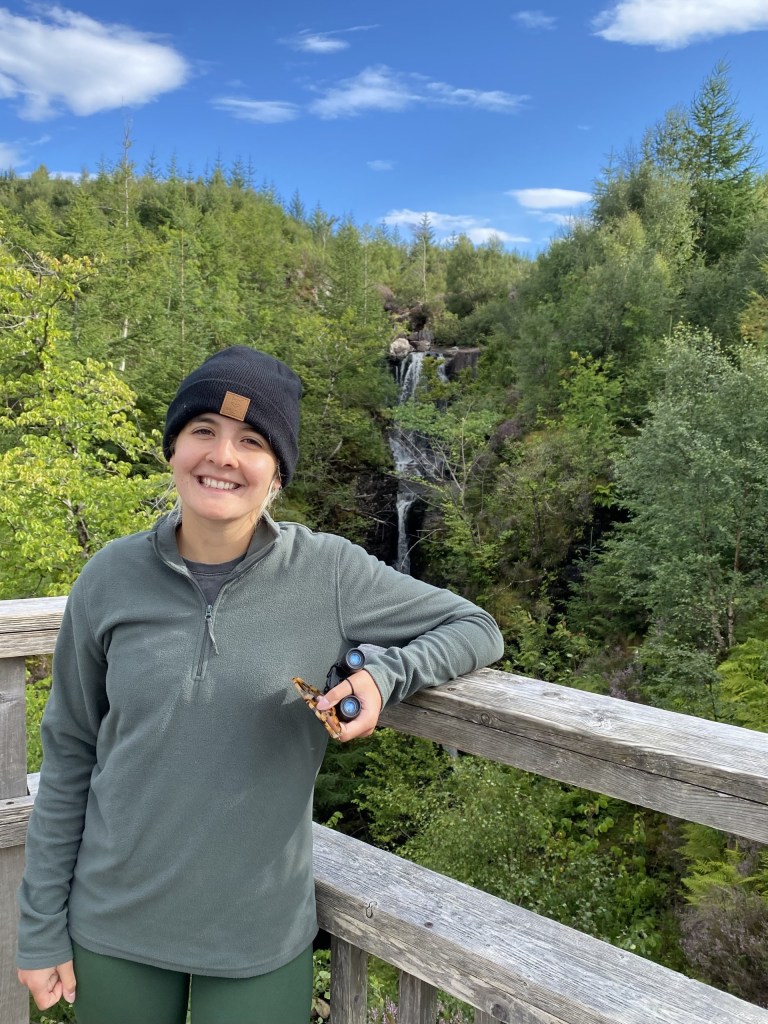
PhD student studying ‘Assessing mammal distribution and habitat association in a rewilding field laboratory using traditional and innovative assessment methods’ (supervisors Dr Pat White, Dr Brian Davison, Jay Mackinnon, Prof Rob Briers). Co-funded by Kilchoan Melfort Trust. Careers event recording here.
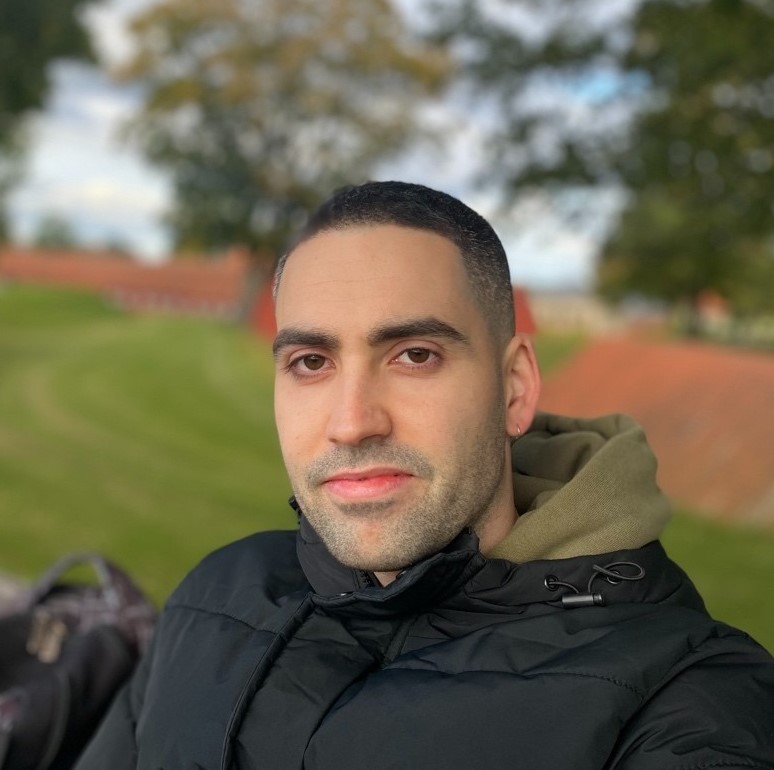
Borja Muñiz Nicolás
PhD student studying ‘Use of novel approaches and technologies to study song thrushes’ unique breeding and feeding behaviour’ (supervisors Prof Pat White, Dr Giacomo Russo, Dr Niamh McHugh, Dr Alex Ball, Clive Walton, Amy Dillon). Co-funded by Game & Wildlife Conservation Trust.
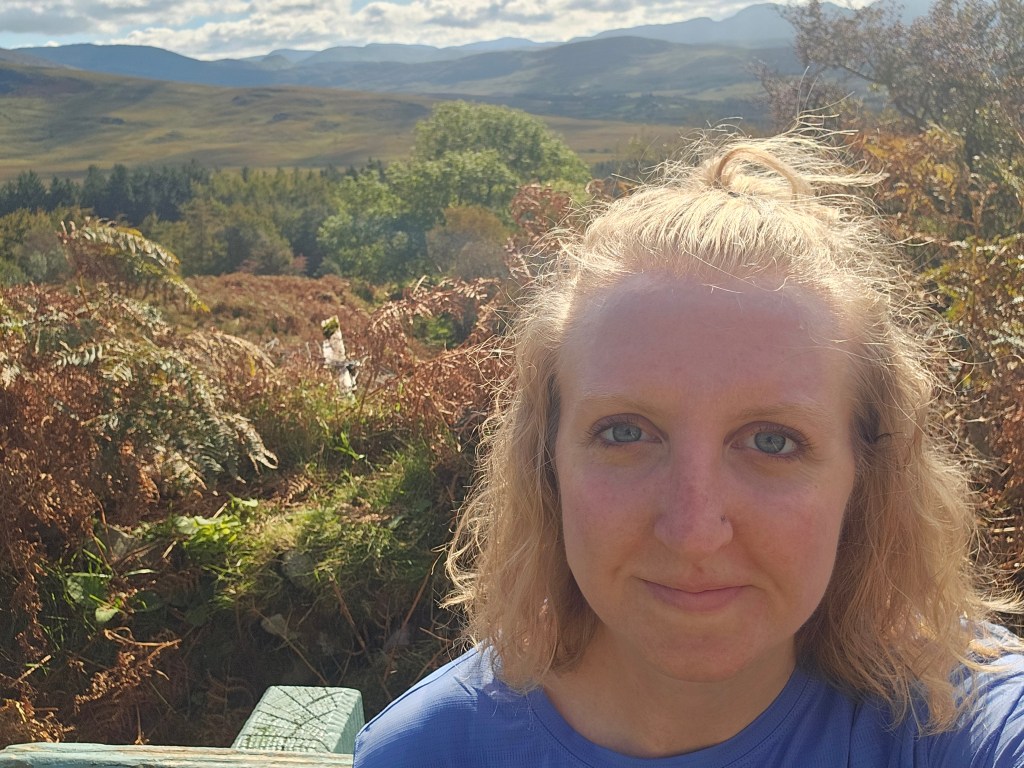
Kate Ebel
PhD student studying ‘Using and testing novel approaches to assess small mammal distribution across Pennsylvania’ (supervisors Prof. Pat White, Prof. James Thorburn, Dr Mel Findlay). Co-funded by Department of Conservation and Natural Resources, Pennsylvania Game Commission and Wildlands Conservancy.
Research
Research programmes and themes
Technologies in terrestrial ecological monitoring – developing evidence-based approaches for their use (read more)
OTTERS
Identification and monitoring of resting and breeding sites of Eurasian otters (read more)
Assessing seasonality of breeding in Eurasian otters through diverse data sources (read more)
Small mammal and bird conservation in Goa, India (read more)
BIRDS
Methods for modelling seasonal productivity in multi-brooded birds (read more)
Upland bird monitoring, conservation and ecology (read more)
Influence on policy and practice
Commissioned conduct evidence review (report) and then to write “Protecting trees from mammal damage: technical guidance” and “Small mammals, beavers and domestic grazing species damage to trees: visual guide” (in press). Some case studies we wrote have been published: Burrator Forest, Holnicote Estate and Nature & Nurture, Ingleborough NNR and Kingley Vale NNR.
Research (report 1 | report 2) commissioned to inform Forestry Commission guidance on “Ecological survey and assessment for woodland creation in England” hosted on gov.uk. Guidance is endorsed by CIEEM.
Research (report) commissioned to inform Forestry Commission, Natural England and DEFRA “Guidance to help inform when an upland breeding wader survey is needed and when woodland creation is likely to be appropriate” hosted on gov.uk.
Funded projects
2024-6 – Managing ancient and native woodland evidence review and guidance revision (Forestry Commission funded £64K – phase 1 delivered; phase 2 delivered | guidance in press)
2025-30 – Use of footfall and seismology in wildlife surveys: closing the gap between theory and application PhD funding (Game & Wildlife Conservation Trust co-funded £10K – ongoing | paper)
2025-9 – Assessing mammal distribution and habitat association in a rewilding field laboratory using traditional and innovative assessment methods PhD funding (Kilchoan Melfort Trust co-funded £43K – ongoing)
2024-5 – Tree protection in woodlands and treescapes systematic review and technical guidance development (Forestry Commission funded £84K – delivered: report | technical guidance and accompanying visual guide on gov.uk | webinar)
2023 – Assessing impacts of forestry on breeding curlew distribution to inform DEFRA and Natural England guidance (Forestry Commission funded £15K – delivered: report | paper)
2023 – Optimization of open-habitat bird surveys for tree planting schemes to inform DEFRA and Natural England guidance (Forestry Commission funded £14K – delivered: report | CIEEM article)
2022 – Long-term monitoring for environmental conservation and restoration using adaptable robots: identification and collation of end user needs (in partnership with Imperial College London | ENU Strategic Research & Knowledge Exchange Fund £2K – delivered: webinar | CIEEM article)
2017-2022 – Nubian ibex genetics in Oman PhD funding (in partnership with Royal Zoological Society of Scotland | Oman Office for the Conservation of Environment funded £38K – delivered: paper 1 | paper 2 | PhD thesis)
Training and teaching
Research contributes to and gives opportunities for students on the CIEEM-accredited MSc Wildlife Biology & Conservation (on campus or distance-learning)
We offer professional training courses on otter ecology, field survey and camera-trapping or to ecological consultancies (such as WSP, SLR) or other organizations, with excellent feedback. Please contact us to find out more or to discuss any bespoke training/CPD courses for your organization
Media
MAGAZINE FEATURE: Watch the elusive world of the rainforest canopy at night featured in National Geographic, featuring Lucy Hughes
PODCAST: Interview about The Otter Field Survey & Monitoring Handbook on the Talking Bat Podcast, featuring Mel Findlay and Pat White
BLOG: Close encounters of the nocturnal kind featuring Lucy Hughes
WEBINAR: Ecology Career Snapshots: Breaking into an academic career in ecology featuring Emily McKelvie
NEWS: Scientists devise new way of spotting secretive mammals high in tropical rainforest canopy featuring Lucy Hughes and Pat White
WEBINAR: Forestry Commission – Protecting trees from mammal damage featuring Pat White
VIDEO: Edinburgh Napier University Innovation Hub – Improving conservation of otters through technology featuring Pat White & Mel Findlay
WEBINAR: CIEEM Academia Special Interest Group – Camera-trapping at otter resting sites – understanding set-up and sampling duration featuring Mel Findlay & Pat White
INTERVIEW: Call of the Wild! ‘STEM with Mr N’ Career Interview with environmental biologist Dr. Patrick White
WEBINAR: CIEEM – Vorsprung drone Technik: UAV thermal imaging in wildlife surveying and protection with case studies from Germany and beyond featuring Frank Zabel & Pat White
WEBINAR: CIEEM Academia Special Interest Group – Meet the robotics scientist: a discussion of the role future robots might play in ecological survey featuring Pat White
CAM-TRAP FOOTAGE: Method(Ec)ology Lab Youtube Channel
Project opportunities
If you are considering applying for the MSc Wildlife Biology & Conservation (on campus or distance-learning), projects in the lab will be available. For current MSc students, project briefs are available in the Research Project Prospectus on the programme Moodle site or contact us for more information
If you are interested in doing a self-funded PhD or MRes project in the lab please contact us
We have a partnership with the CREA Margay Project in Panama to study camera trapping and night vision survey methods for arboreal mammals, please contact us for more information. You can find out more about the Margay project and the Cocobolo reserve and field station on their Youtube channel
We are currently advertising for a self-funded Masters by Researhc project “Investigating wildlife camera-trap theft and vandalism in the wild” which is a good opportunity to develop a range of research skills. All equipment and training would be provided. Please contact Pat White for information.
Former research staff
Postdoctoral Research Assistant Dr Richard Turner (funded by Forestry Commission)
Research Assistant Murray Borthwick (funded by Forestry Commission)
Research Assistant Roisin McGrory (funded by Forestry Commission)
Former research and project student outputs
PhD student Mataab al Ghafri (with RZSS) – Genetic assessment and development of genomic resources for Nubian ibex conservation in Oman (Oman Government funded | paper 1 | paper 2 | PhD thesis)
PhD student Melanie Findlay – Optimisation of monitoring using camera-traps and field evidence when identifying Eurasian otter Lutra lutra resting or breeding sites (paper 1 | paper 2 | paper 3 | CIEEM article | webinar | PhD thesis)
MRes student Mike Thornton – Evidence-based assessment of protected area (SPA) design for Taiga bean geese (with WWT) (paper | BOU blog post)
MSc student Ben Blackledge – Using Convolutional Neural Networks and geophones to identify large mammal species from their footfall (paper)
MSc students Jill Grozier, Jenna Lane, Alex Willey, Annelise Bokenkamp, Nils Schoefer, Sophie Wilson and Ross Rutherford and BSc student Hannah Humphreys – Low nest success of black-legged kittiwakes at a mainland colony is not associated with disturbance from walkers or boats (contributed to paper)
MSc student Lizzie Danes – Approximating the age of Eurasian otter (Lutra lutra) cubs from camera trap footage using proportional body measurements (paper)
MSc student Stephen Dias – Habitat selection of Indian smooth-coated otters Lutrogale perpicillata in the pericoastal, urbanised landscape of Goa (with Parvatibai Chowgule College of Arts and Science) (paper)
MSc student Neil Diamond – Determining the Efficacy of Camera Trap Surveys in the Eurasian Otter Lutra lutra (contributed to paper)
MSc student Kate Ebel – Baits and lures impact time to detection and detection probabilities in weasels (with Wildland Conservancy) (paper)
MSc student Lucy Ferrer – Modelling the breeding season functions of a multi-brooded songbird produces similar outputs to those from a marked population (contributed to paper)
MSc student Izabella Kennedy – Habitat selection by nightjars in Ashdown Forest in 2023 (Sussex Bird Report article)
MSc student Alistair Marjot – Urban tree cover improves breeding bird abundance across all public cemeteries in one of Europe’s largest cities (paper)
MSc student Laura Mitchell – A comparative study of bat emergence count methods including night vision aids and computer vision automation (CIEEM article)
MSc student Ruth Peters-Grundy – Comparison of effectiveness of close-focus camera-traps and live traps for surveying small mammals (footage)
MSc student Alba Ripodas Melero -Behaviour of individual marked black grouse at a lek site in the Cairngorms National Park (contributed to paper)
MSc student Sina Weier – Changes of bat species distribution over an altitudinal gradient in the Soutpansberg, South Africa (with University of Venda) (paper)
MSc student Darren Wilson – Diet Composition of Eurasian Sparrowhawks Accipiter nisus in Edinburgh, Scotland (contributed to paper)
MSc student Gillian Wilson – Estimating availability bias in diving seabirds and marine mammals from aerial surveys – a systematic review (with HiDef Aerial Surveying Ltd.) (contributed to poster at European Cetacean Society conference)
MSc student Frank Zabel – Accuracy of counting red deer with UAV-mounted thermal cameras (paper | webinar)
BSc student Shona Gordon – An investigation into the variation of the vocalisations emitted by wild populations of the Eurasian otter at a holt in Fife (thesis | was used to inform otter section of this book)

